Get free quotes from mobile imaging near you
Takes about a minute. Free, no obligation; providers reply to you directly.
The first time I helped a skilled nursing facility administrator vet a mobile X-ray vendor, she handed me a glossy brochure, a phone number, and said, “They seem fine.” Three months later, they had a stat read sitting unread for six hours because the radiologist coverage had quietly changed. Nobody told her.
That’s how it usually goes. Mobile X-ray feels like a commodity purchase — you call a few providers, compare turnaround times, pick the cheapest one with a decent website. But the real due diligence happens in the gaps between what providers say and what they actually deliver.
The Short Version:Most mobile X-ray service failures aren’t dramatic — they’re slow, quiet, and only obvious after a patient outcome is already compromised. The red flags are visible upfront if you know what to look for.
Key Takeaways:
- Credential verification is table stakes, but it’s skipped far more often than it should be
- Vague turnaround-time promises are almost always meaningless without written SLAs
- High technologist turnover at a provider predicts inconsistent care at your facility
- Requiring a live equipment demonstration before signing is completely reasonable — and telling if they refuse
Red Flag #1: Vague Turnaround-Time Promises
They say “fast results.” You ask what that means. They say “usually same day.”
Usually is doing a lot of work in that sentence.
Stat reads for acute clinical needs — suspected pneumonia, hip fracture post-fall, line placement confirmation — have different requirements than routine surveillance imaging. A provider who can’t give you a written SLA broken down by study type (stat vs. routine, X-ray vs. ultrasound) doesn’t have a real workflow. They have a hope.
What to ask: “What is your written SLA for stat reads, and what happens if you miss it?” If they deflect, that’s your answer.
Red Flag #2: Can’t (or Won’t) Let You See the Equipment
This one gets dismissed too often as being “too demanding.” It isn’t.
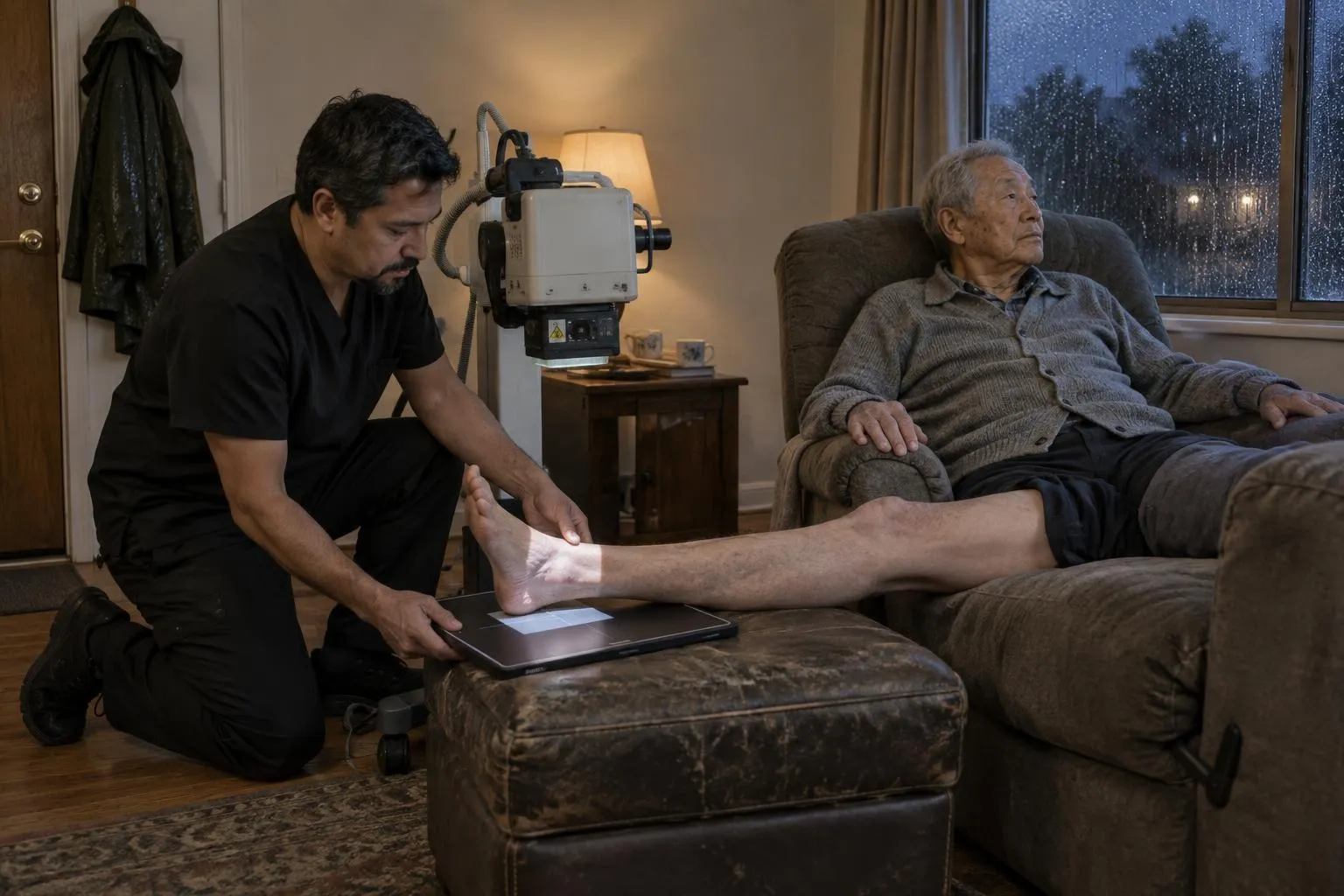
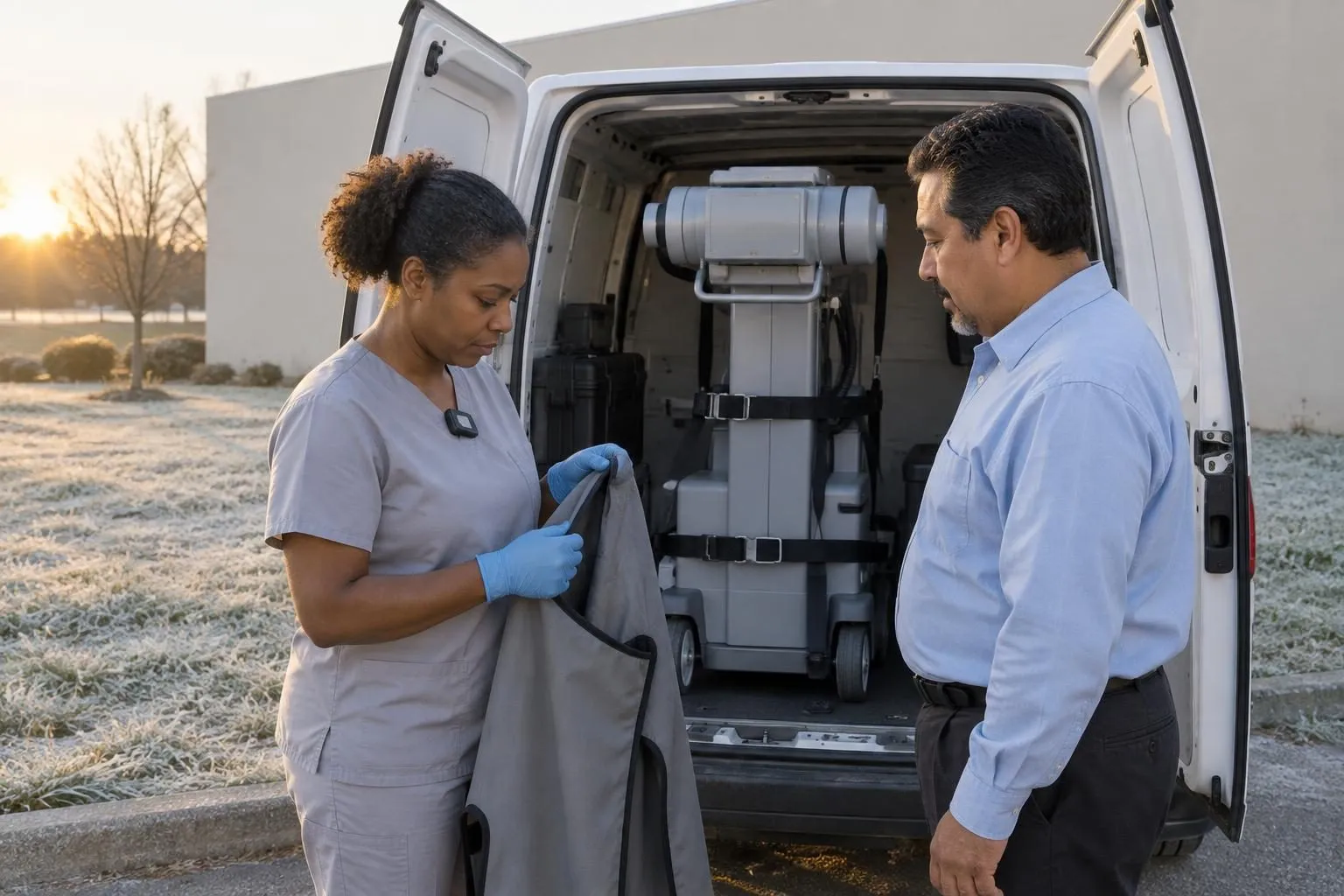
A denial of a site visit or equipment demonstration almost always hides one of three things: outdated hardware, a maintenance backlog, or a staffing situation that doesn’t hold up to scrutiny. Reputable providers welcome it — showing off digital flat-panel detectors and CR-to-DR upgrades is a selling point. Hiding the van is not.
Pro Tip:Ask specifically whether their portable units produce digital radiograph images transmitted electronically, or whether they’re still using computed radiography (CR) cassettes. CR is slower, adds a processing step, and is increasingly a sign of underinvestment.
Red Flag #3: Technologist Turnover You Can’t Get a Straight Answer About
In radiology hiring generally, frequent job reposts are a documented signal of burnout, bad shifts, and management dysfunction. The same dynamic applies inside mobile X-ray companies — with a compounding effect at your facility.
Every time a new tech rotates in, your clinical staff trains them on your building layout, your patient population, your workflow quirks. That friction is invisible in a contract but very visible in daily operations. Nurses re-explaining elevator codes to a different face every eight weeks isn’t a small thing.
What to ask: “What’s your 12-month technologist retention rate for the staff covering our region?” If they don’t track it, that tells you something. If the number is below 70%, take it seriously.
Red Flag #4: Credentials That Can’t Be Cross-Verified
ARRT licensure is the baseline. It’s also easy to fake in a pitch conversation and easy to verify in two minutes on the ARRT public registry.
The concerning pattern isn’t outright fraud — it’s credential ambiguity. A tech listed as “ARRT-eligible” or “working toward licensure” is unlicensed. A provider whose staffing model relies on those individuals has a liability exposure that transfers to your facility when something goes wrong.
Reality Check:“ARRT-eligible” means not yet certified. It’s not a lesser credential tier — it means the credential doesn’t exist yet. This distinction matters for your compliance paperwork.
Red Flag #5: No Written Protocol for Equipment Failure
Portable X-ray equipment fails. Flat-panel detectors crack, generators malfunction, software hangs. A mobile provider without a documented backup protocol is one equipment failure away from leaving you without imaging coverage on a Friday night.
What the written protocol should include: Estimated response time for equipment swap, backup technologist availability, and whether they have a second unit in your service region. “We’ll figure it out” is not a protocol.
Red Flag #6: References From a Single Facility Type
A provider whose references are all assisted living communities, but you’re running a skilled nursing facility — or vice versa — hasn’t necessarily earned your trust. The patient acuity, clinical workflows, and stat imaging demands are meaningfully different.
| Facility Type | Typical Imaging Volume | Stat Need Frequency | Key Requirement |
|---|---|---|---|
| Skilled Nursing Facility | High | Several times/week | Sub-2hr stat read SLA |
| Assisted Living | Moderate | Occasional | Next-day routine reads |
| Hospice / Home Care | Low | Rare | Flexibility, patient comfort |
| Hospital-at-Home | Variable | Can be frequent | Integrated EMR workflow |
Ask for references from facilities that match your acuity profile. If they can’t provide them, ask why.
Red Flag #7: Pressure to Sign Before You’ve Asked All Your Questions
Urgency is a sales tactic. “We have another SNF in your area looking at this slot” may be true, but it’s irrelevant to whether they’re the right provider for your patients.
Rushed hiring — in any context — ignores long-term fit to solve a short-term problem. Healthcare bad hires carry real costs (broadly estimated at 30–50% of first-year contract value when you factor in transition friction, clinical disruption, and re-procurement). A provider who won’t give you two weeks to complete due diligence is telling you something about how they’ll handle urgent requests after you sign.
Nobody good needs to rush you.
Practical Bottom Line
Before you sign anything, work through this checklist:
- Request a written SLA broken down by study type — stat vs. routine, X-ray vs. ultrasound
- Verify ARRT credentials directly at the ARRT public registry for every tech who will cover your facility
- Ask for 12-month retention rates for technologists in your region
- Require an equipment demonstration — see the actual portable unit, not photos of one
- Get references from your facility type specifically, not just “healthcare clients”
- Review their backup protocol for equipment failure in writing
The best mobile X-ray providers expect these questions. They’ve answered them before. The ones who push back or go vague are showing you exactly who they are before you’ve handed them your patients.
For a fuller picture of how mobile X-ray services work, what they cost, and what “good” actually looks like, see The Complete Guide to Mobile X-Ray Services. If you’re evaluating providers for a specific location, browsing local providers by city is a practical starting point before you get on the phone.
Done reading? Get quotes from mobile X-ray services near you.
Takes about a minute. Free, no obligation; providers reply to you directly.
Popular cities:
Nick built this directory to help SNF administrators and home health agencies find credentialed mobile imaging providers without wading through services that lack proper ARRT licensure or ACR accreditation — compliance gaps he uncovered when researching portable imaging options for a family member in long-term care.